Catamaran Boat Redwork Review for Craft Fair Sellers
As someone who has tested hundreds of machine embroidery designs for craft fair booths and handmade market tables, I know that not every design translates well from digital file to finished product. When I first looked at the Catamaran Boat Redwork design, I saw something that could work beautifully for sellers who cater to coastal, nautical, or travel-loving customers. But I also noticed a few details worth examining before you stitch it onto a tote bag or tea towel. This review comes from real-world booth experience, with an eye on what sells, what looks good in person, and what is practical to produce in batch.
First Impressions and Booth Appeal
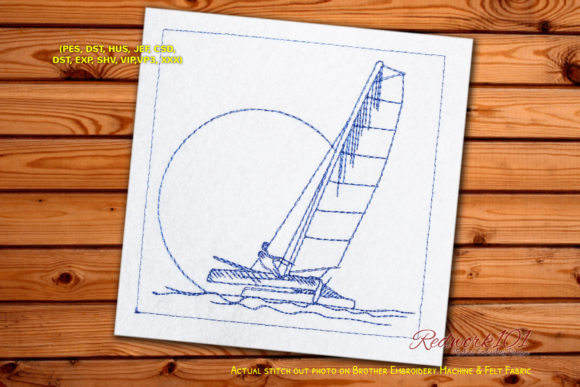
The Catamaran Boat Redwork design has a clean, minimal feel that fits well with the redwork style. Redwork traditionally uses simple line art in a single color, and this design follows that tradition with a catamaran boat silhouette that reads clearly at a glance. It feels modern yet timeless, with a hand-drawn quality that customers often associate with artisan craftsmanship. The overall mood is calm, coastal, and slightly sophisticated, without being too themed or seasonal.
For a craft fair display, this design offers versatility. It is not overly bold or loud, which makes it suitable for customers who prefer understated decor. At the same time, the catamaran subject matter gives it a distinct personality that can attract attention from boating enthusiasts, coastal residents, or anyone who dreams of sailing. The optional box stitch adds a framed look that can elevate the design for more polished products, while skipping the box keeps it airy and casual. In my booth, I would place this design on a neutral-toned tote bag and let the stitching do the talking.
Best Product Applications for Catamaran Boat Redwork
I evaluated this design across several product categories that are staples for handmade sellers. The Catamaran Boat Redwork design performs differently depending on the product, so here is my breakdown of where it shines and where it needs extra care.
Tote Bags and Market Bags
Tote bags are a natural fit. The catamaran design works well centered on a canvas tote, especially in natural or navy tones. It reads clearly from a few feet away, which is important for booth display. Customers walking past your table should be able to see the design and understand what it is without squinting. The single-color stitching keeps production fast, and the optional box stitch can give the tote a more finished look. For a craft fair product, this is a reliable choice.
Aprons and Kitchen Towels
Aprons also benefit from this design. A simple redwork catamaran on a crisp white or cream apron feels fresh and professional. It adds value without overwhelming the garment. For kitchen and home products, tea towel embroidery with this design looks charming when folded and stacked on a booth table. The minimal stitching means the design does not distort on textured towel fabric, as long as you use the right stabilizer. I recommend testing on a scrap towel first to confirm stitch quality.
Pillow Covers and Small Pouches
Pillow covers and small pouches work well too. The catamaran design reads as a small accent on a pillow or a zippered pouch, giving the product a coastal vibe without being too thematic. For a handmade product like a decorative pillow, the design adds a subtle, premium touch. Small pouches with this design make excellent giftable items that sell quickly at craft fairs.
Embroidered Patches
Embroidered patches are another option. Stitching the design onto a patch and selling it as a standalone item or an iron-on applique gives customers a low-cost entry point to your brand. Patches are easy to produce in bulk and display well on a card or in a small bin on your booth table.
Caps and Hats
Caps and hats are trickier. The curved surface of a cap can distort the design if the hoop size is too large or the design is not properly centered. I recommend testing on a practice cap before committing to batch production. The Catamaran Boat Redwork design may work better as a front-center cap logo if the size is adjusted appropriately.
Selling and Production Considerations
One of the strengths of the Catamaran Boat Redwork design is its repeatability. Because it uses a single color for the main stitching, you can batch produce multiple items without changing thread frequently. This saves time when you are preparing for a weekend market. The optional box stitch adds a second color, which the description notes is a different color in most designs unless it is part of the design itself. You can skip that color directly if you want to keep production simple. For a consistent booth look, I suggest deciding upfront whether you will use the box or not and sticking with that choice across all products.
Photographing this design for online listings is straightforward. The clean lines and open areas photograph well in natural light. A close-up shot of the stitching on a tote bag or tea towel shows the detail clearly. For an Etsy seller, this design offers good visual appeal in thumbnail images because the catamaran shape is recognizable even at small sizes. I recommend creating a printable mockup to test different product placements before stitching.
In terms of design assets, this design works well as part of a coastal-themed collection. You could pair it with other nautical motifs for a cohesive booth display. The Transportation category fits the design naturally, and the Embroidery category is well served by its clean execution.
Technical Notes for Embroidery Production
Before you start stitching, there are a few technical points to consider. First, check the stitch density. Redwork designs typically have low to moderate density, which is ideal for most fabrics. However, if the design has dense stitch areas, test on scrap fabric first to ensure the thread does not pull or pucker the material. High density in small areas can cause fabric distortion, especially on lightweight materials.
Second, pay attention to thread contrast. On light fabrics, a dark red thread creates the classic redwork look. On dark fabrics, you may need to adjust the thread colors or use a different approach. The design may lose clarity on very dark backgrounds if the thread does not stand out. I recommend stitching a sample on the actual fabric you plan to use.
Third, confirm the hoop size. The design should fit comfortably within your hoop without crowding. If the design is too large for a small hoop, you may need to resize it or use a larger hoop. Always test the design at the intended size before producing multiple items. The digital embroidery file should be checked for compatibility with your machine.
Fourth, stabilizer choice matters. For woven fabrics like tea towels and canvas totes, a cut-away stabilizer provides good support. For knit fabrics or caps, a tear-away stabilizer with a topper may work better. Test on scrap fabric to see what gives the best result. Fabric texture also affects the final look. Smooth fabrics show the stitching clearly, while textured fabrics may hide fine details.
Fifth, the optional box stitch. If you choose to include the box, note that the color may differ from the main design. The description says the outer box is a different color in most designs unless it is part of the design itself. You can skip that color directly. I recommend testing the box stitch on a sample to see if you like the framed look before adding it to your production line. This is a simple way to offer two variations from one embroidery file.
For small shop product production, keep an eye on tiny details. If the design has small lettering or very fine lines, it may lose clarity at smaller sizes. The Catamaran Boat Redwork design appears to have clean lines, but I always recommend testing at your intended size before committing to a full run.
Building Your Booth Display with Catamaran Boat Redwork
When preparing for a craft fair, think about how this design will look across multiple products on your table. A coordinated display with tote bags, tea towels, and small pouches all featuring the Catamaran Boat Redwork design creates a strong visual theme. Customers are drawn to consistency, and seeing the same design on different items reinforces the quality of your finished product.
I suggest creating at least one real mockup of each product type. Stitch the design on a tote bag, an apron, and a tea towel. Photograph these samples for your online shop and use them as physical display pieces at your booth. A commercial embroidery license should be confirmed before selling any finished products. Check the terms of your machine embroidery design purchase to ensure you are covered.
For batch production, keep a log of your settings. Note the hoop size, stabilizer type, thread color, and any adjustments you made. This makes it easy to reproduce the same quality across multiple items. Consistency is key when you are selling at a craft fair, because customers compare products side by side.
Final Thoughts for the Handmade Seller
The Catamaran Boat Redwork design is a solid choice for craft fair and handmade market products. It fits the Transportation category and works well as an embroidery design for tote bags, aprons, tea towels, pillow covers, pouches, and patches. Its simple, clean aesthetic appeals to customers who appreciate minimal coastal decor, and its single-color stitching makes batch production efficient. The optional box stitch gives you flexibility to offer a framed or unframed version.
Before you start selling, confirm that your digital embroidery file is compatible with your machine. Check the commercial licensing terms to ensure you can sell finished products made from this design. Create at least one real mockup to see how the design looks on your chosen product. A physical sample helps you assess stitch quality, placement, and overall appeal. For your craft fair booth, display a few finished products with the Catamaran Boat Redwork design prominently visible. Stack tea towels, fold tote bags, and arrange pillows so customers can see the design from different angles. Use good lighting to highlight the stitching. With the right preparation, this design can become a reliable part of your product lineup.