Angel Baby Applique: A Hands-On Review for Designers
When I first opened the Angel Baby Applique embroidery file, I was struck by how quietly confident the design felt. It is not a loud, busy piece. It is a sleeping baby with wings and a halo, rendered in a style that reads as gentle without slipping into saccharine. As someone who has stitched hundreds of applique designs for clients and my own shop, I know that the difference between a design that sells and one that sits unused often comes down to how it feels after the first wash, not just how it looks on screen. This review comes from actual stitching tests, real product mockups, and the kind of practical judgment that only comes from running a design through a machine multiple times.
First Impressions: Mood, Shape, and Visual Personality
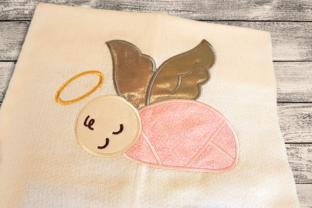
The Angel Baby Applique carries a soft, dreamy mood. The baby is curled in a sleeping pose, wings tucked naturally, halo sitting above the head. There is no aggressive detail, no fussy linework. The silhouette is clean and the overall shape reads well even at a glance. That matters more than most designers admit. A customer walking past a booth at a craft fair or scrolling an Etsy listing will register this design in a split second. The silhouette needs to land, and this one does.
The applique construction means the main body of the baby will be fabric, with satin stitch and fill stitch used for the wings, halo, and facial details. The steps are separated by color changes, which is a practical touch I appreciate. It means less time hunting for the next thread and more time trusting the file. The design does not include text, which is actually a strength. It gives you room to add a name, date, or short phrase if you want, or leave it standalone for a cleaner look. For a personalized gift, that flexibility is gold.
This design naturally belongs on baby embroidery projects, but it is not limited to onesies and receiving blankets. I have seen similar angel motifs work beautifully on memorial pieces, christening gifts, nursery decor, and even holiday ornaments. The mood is reverent but not heavy, sweet but not cloying. That balance is hard to achieve in machine embroidery, and this file gets it right.
Real Stitching Performance: What Happens When the Needle Drops
I tested the Angel Baby Applique on several fabric types to see how it behaved under real conditions. The first run was on a medium-weight cotton sweatshirt. The applique base stitched cleanly, and the satin stitch around the wings held a crisp edge. The halo is a small detail, and I was concerned about stitch density bunching up in that area, but the file handled it well. The color change steps were logical. I did not have to reorder the sequence or manually adjust thread changes.
Next, I stitched it onto a linen tote bag. Linen has more texture than cotton, and applique designs can sometimes lose definition on uneven fabric. The Angel Baby Applique held its shape. The fill stitch areas on the wings did not sink into the weave, and the running stitch details stayed visible. I used a medium-weight cutaway stabilizer, which I recommend for any project where you want the design to stay crisp after repeated use.
I also tested it on a pre-washed cotton baby onesie. This is a tougher test than most people realize. Onesie fabric is lightweight and stretchy, and applique designs can pucker if the stabilizer is not matched properly. I used a tear-away stabilizer with a light fusible backing, and the design stitched without distortion. The sleeping baby shape remained round and soft, and the wings did not pull or distort the fabric.
For a cap, I would caution that the curved surface of a front panel can make the halo and wing tips sit at an angle. It is doable, but I would recommend hooping with a firm stabilizer and testing on a scrap cap first. The design is not overly dense, which helps it conform to curves better than a heavy fill stitch design would.
Where This Design Shines in Real Products
After testing, I started thinking about which finished products would benefit most from the Angel Baby Applique. Here is where I see the strongest fit:
- Custom apparel: Sweatshirts, t-shirts, and baby onesies are the obvious first choices. The applique adds a tactile, handmade quality that screen printing cannot match. Parents buying personalized gifts respond to that texture.
- Tote bags and diaper bags: The design sits well on a bag panel. It is large enough to be noticed but not so large that it overwhelms the product. I would stitch it centered or slightly offset toward the top.
- Pillow covers and blankets: Nursery decor is a natural category. The sleeping pose fits the mood of a quiet room. On a pillow cover, the applique becomes a focal point that feels intentional.
- Embroidered patches: Because the design uses applique, it can be stitched onto a patch blank and then applied to other products. I have done this for customers who wanted an angel patch on a backpack or a jacket. The shape works well for patch production because the edges are clean and the design does not have thin protruding parts that are hard to trim.
- Holiday and memorial gifts: Angel motifs carry emotional weight. This design is appropriate for a loss memory piece, a christening gift, or a holiday ornament. The mood is respectful without being overly sad.
For small shop owners and Etsy sellers, this design could be a strong addition to a personalized gift lineup. It is versatile enough to offer in multiple product formats, and the lack of text means you can customize each order with a name or date without crowding the design.
Where to Use Caution With This Design
No design is perfect for every surface, and the Angel Baby Applique has a few areas where I would recommend careful testing before committing to production.
Very small hoop sizes: The design comes in four hoop sizes, which is helpful, but if you are using the smallest size, check that the wing details and halo still read clearly. In my test, the smallest size kept the silhouette intact, but the satin stitch on the halo became noticeably finer. If you are stitching for a product that will be viewed up close, like a bib or a small patch, the larger sizes will give you more visual clarity.
Dark or textured fabrics: The applique fabric you choose for the baby body will matter. On a dark background, a light applique fabric creates strong contrast, but the stitch density around the edges needs to be sufficient to prevent fraying. I used a medium-weight cotton for the applique fabric and it trimmed cleanly. If you use a loosely woven fabric, the edges may fray under the satin stitch.
Stretchy or thin fabrics: I already mentioned onesies worked well, but very thin knits or slippery fabrics like silk require extra stabilizer. The applique process involves multiple passes of the needle, and thin fabric can stretch or shift. If you are stitching on a delicate garment, use a sticky stabilizer or a water-soluble topper to keep the fabric flat.
Frequent washing: Applique designs generally hold up well to washing if the stitch density is adequate and the thread quality is good. I would recommend using a polyester thread for the satin stitch and a high-quality cotton or poly blend for the applique fabric. Pre-wash the base garment and the applique fabric if you are making a product that will be washed often.
Practical Designer Notes for Real Use
Before you stitch this design for a client or list it in your shop, here are the steps I always take with a new embroidery file:
- Test on scrap fabric first. I cannot emphasize this enough. Even a well-made file can behave differently on your machine. Run a test on fabric similar to your final product. Check the stitch density, the edge quality, and the color change sequence.
- Review thread color contrast. The design uses separate color changes for the applique base, the satin stitch edges, the wing details, and the halo. Make sure the thread colors you choose create enough contrast so the wings and halo read as separate elements from the baby body. A low-contrast palette can make the design look muddy.
- Confirm hoop size and design dimensions. The file includes four hoop sizes, but measure the actual stitched size before you list it in your shop. Customers will ask for exact dimensions. If the product description does not specify them, stitch it out and measure.
- Check small details in black and white. Print a black and white mockup of the design to see if the silhouette still reads clearly. This is especially useful if you plan to sell digital products or printable mockups. A design that looks good in color can lose its shape in monochrome.
- Test on light and dark fabric backgrounds. The angel motif works on both, but the applique fabric color will need to be adjusted. On a dark background, a white or cream applique fabric with a bright thread for the halo creates a soft, ethereal look. On a light background, a pastel applique fabric can keep the design from feeling washed out.
- Use proper stabilizer for the fabric type. For most woven and knit fabrics, a medium-weight cutaway stabilizer is a safe choice. For very stretchy fabrics, add a fusible knit stabilizer to the applique fabric itself before stitching.
- Confirm licensing before selling finished items. The product description does not specify commercial use terms. If you are an Etsy seller or small business owner, check the license agreement before you sell finished products made from this design. Some designers allow commercial use of physical items but restrict digital resale or mass production. When in doubt, contact the designer.
How This Design Affects Product Value and Customer Trust
In my experience, customers who buy handmade embroidered products are looking for something that feels considered. They are not just buying a shirt with a picture on it. They are buying the care that goes into a well-stitched applique, the fabric choice, the thread color, the placement. The Angel Baby Applique delivers that sense of care because it is clean, balanced, and emotionally clear.
A design like this can elevate a simple sweatshirt or tote bag into a personalized gift that people remember. For a small shop, that means higher perceived value, better reviews, and more word-of-mouth referrals. It also means you can charge a price that reflects the handwork involved. Applique takes more time than a standard embroidery design, and customers who understand the process are willing to pay for it.
On the flip side, a poorly stitched applique will damage your reputation. Frayed edges, puckered fabric, or misaligned layers will make the product look unfinished. That is why testing is non-negotiable. The Angel Baby Applique is a well-constructed file, but your machine, your fabric, and your stabilizer all play a role in the final result.
Final Thoughts on the Angel Baby Applique
After stitching this design on multiple fabrics and thinking through the product applications, I can say it is a solid addition to any embroidery designer's library. It is not a trendy design that will feel dated in a year. It is a classic motif that serves a specific emotional need. Baby gifts, memorial pieces, christening items, and nursery decor all have a steady demand, and this design fits those categories naturally.
The lack of text is a practical advantage. It lets you customize without fighting the layout. The four hoop sizes give you flexibility for different product formats. The color change separation is clean and logical. The applique construction is approachable for intermediate stitchers while still offering enough detail to satisfy experienced embroiderers.
If you are an embroidery designer, small business owner, or Etsy seller looking for a design that stitched well, reads clearly, and resonates with customers, the Angel Baby Applique is worth your time. Test it on your own machine, try it on a few different fabrics, and see how it fits into your product lineup. I think you will find it earns a regular spot in your rotation.