Cute Flying Pig: A Designer's Honest Review
When I first opened the Cute Flying Pig machine embroidery design, I have to admit I smiled. The title does not exaggerate. This is a genuinely joyful little motif that lands somewhere between whimsical and heartwarming. As someone who has tested hundreds of embroidery files over the years for client work, personal projects, and small shop merchandise, I have learned to spot designs that look good on screen but disappoint after stitching. This one, I am pleased to say, holds up to real use. Let me walk through what this design actually feels like in the hands of an experienced embroiderer, and whether it deserves a place in your next project.
First Impressions and the Mood of This Design
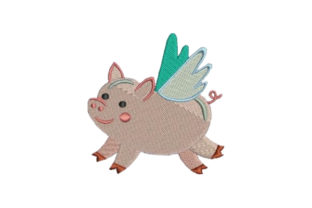
The Cute Flying Pig design captures a playful, buoyant energy. The pig is shown mid-flight, with little wings and an expression that feels genuinely cheerful. The shape is rounded and friendly, which makes it naturally suited to projects that need a soft, approachable look. The layout is compact enough to work on several product types but still has enough visual presence to stand alone as a focal point. I immediately thought of baby gifts, nursery decor, and casual apparel. But the more I studied it, the more I realized its reach could extend into boutique products, holiday items, and even lighthearted gifts for adults who appreciate whimsy.
Because the design falls under the Baby Animals category, it carries that gentle, innocent vibe that parents and gift-givers look for. But do not let that limit your thinking. I have seen similar motifs sell well on kitchen towels, tote bags, and even as embroidered patches for denim jackets. The key is the emotional response the design creates. People smile when they see it. That is a powerful asset for any embroidery project you plan to sell or give as a personalized gift.
Real Project Use: A Custom Tote Bag Test
To give this design a fair evaluation, I ran it through a real project scenario. I prepared a medium-sized cotton tote bag — one of those natural canvas totes that are popular in craft fairs and Etsy shops. I wanted to see how the Cute Flying Pig would look on a product that is both practical and giftable. I used a medium-weight cutaway stabilizer and a standard 40-weight polyester thread in a soft pink for the pig body, with a darker shade for the outline and a bright accent for the wings. The design stitched out cleanly, with no skipped stitches or puckering. The satin stitch areas had good coverage, and the fill stitch sections were dense enough to look solid without feeling stiff.
I also tested it on a lightweight cotton onesie to simulate a baby gift scenario. On the onesie, I used a tear-away stabilizer and a lighter thread color. The design held its shape well, and the detail remained crisp even on the smaller surface. The pig's eyes and snout — the parts most likely to blur at small sizes — remained clear and readable. This told me the digitizer paid attention to stitch angles and density. For a design in the Baby Animals category, that kind of precision matters because parents and gift buyers notice when a design looks cheap or messy after washing.
Where This Design Shines in a Product Line
Based on my testing, the Cute Flying Pig works best on products where the fabric is stable and the hoop size gives the design breathing room. I would recommend it for:
- Custom apparel like sweatshirts, t-shirts, and baby bodysuits — the cheerful mood fits casual wear well.
- Tote bag designs and canvas pouches — the design is sturdy enough to handle repeated use.
- Embroidered patches for jackets, backpacks, or hats — the shape works well as a standalone patch.
- Pillow covers and nursery decor — the playful theme fits a child's room or a whimsical adult space.
- Kitchen towels and aprons — a flying pig motif is unexpected and charming in a kitchen setting.
- Holiday gifts and small shop merchandise — the design has broad appeal and is easy to pair with a message or monogram.
If you are an Etsy seller or run a craft business, this design could be a strong addition to your catalog. It photographs well, which helps with printable mockups and digital product previews. The visual personality is warm and inviting, which tends to convert well with buyers who are looking for a handmade product that feels personal and thoughtful.
Areas Where Care Is Needed
No design is perfect for every situation, and the Cute Flying Pig has a few limitations worth noting. If you plan to use it in a very small hoop size, the detailing in the face and wings may become too tight. I recommend testing it at your intended size before committing to a batch of products. On textured fabrics like fleece or thick terry cloth, the finer stitch details may sink into the nap, making the pig's expression less readable. Use a suitable stabilizer and consider a topping layer to keep the stitches visible.
On stretchy fabric like jersey knit or lightweight interlock, the design can pull or distort if the stabilizer is not matched correctly. A cutaway stabilizer is usually safer for stretchy bases. On dark fabric, the thread colors will need to be chosen carefully. The design relies on lighter shades for the pig's body and wings, so a white or pastel thread will pop nicely on dark backgrounds, but you may want to run a test to confirm contrast. For curved surfaces like caps or hats, the design's shape is compact enough to fit, but check the placement so the wings do not get distorted by the curve.
If you are stitching this on items that will be washed frequently, such as kitchen towels or baby clothes, consider using a thread that is colorfast and a stabilizer that holds up to laundering. The stitch density is moderate, so the design should not shrink or pucker excessively after washing, but I always recommend testing a finished sample through a wash cycle before selling to customers.
How This Design Affects Product Value and Customer Trust
In my experience, buyers respond to designs that feel intentional and well-executed. The Cute Flying Pig has a professional look that adds to the perceived value of a finished product. When a customer sees a clean, vibrant embroidery on a tote bag or sweatshirt, they associate that quality with the maker's brand. That translates to better reviews, repeat purchases, and word-of-mouth referrals. For a small shop product or a personalized gift, this design delivers a strong emotional hook without being overly complicated.
The design also works well for commercial embroidery projects where you need to produce multiple units quickly. The stitch count is reasonable, and the color changes are straightforward. I did not encounter any long trims or awkward jumps that would slow down production. If you are running a handmade shop or doing apparel decoration for clients, efficiency matters, and this design respects that.
Practical Designer Notes Before You Stitch
Before you commit to stitching the Cute Flying Pig on a final product, here are a few steps I recommend based on my own testing:
- Test on scrap fabric first. Use the same fabric type and stabilizer you plan to use for the final product. This will reveal any issues with thread tension, stitch density, or design sizing.
- Check thread color contrast. The design uses multiple colors, and the contrast between the pig's body, wings, and outline matters for readability. Try a test in black and white thread to see how the design reads without color.
- Review stitch density. If the design feels too dense for your fabric, consider scaling it up slightly to give the stitches more room. If it feels too loose, check your stabilizer choice.
- Confirm hoop size. Make sure your hoop is large enough for the design at your intended size. The design is compact, but it still needs room for the full motif, including the wings.
- Inspect small details. The pig's eyes, snout, and wing tips are the most delicate parts. If any of these look unclear in your test, adjust the thread weight or design size.
- Use proper stabilizer. For most stable fabrics, a medium-weight cutaway or tear-away will work. For stretchy or loose-weave fabrics, lean toward cutaway with a stabilizer topping.
- Check licensing before selling. Since this is a digital embroidery file, confirm whether the license allows you to use it for commercial embroidery and finished product sales. If you plan to sell the embroidery file itself as a design asset, you need a separate license for that. Always read the terms before listing on your Etsy shop or craft business site.
Final Thoughts on the Cute Flying Pig
The Cute Flying Pig is a well-digitized, emotionally appealing machine embroidery design that fits a wide range of projects. It is not a complex, high-detail motif, but it does not need to be. Its strength is in its charm and versatility. Whether you are making a custom tote bag for a friend, a baby gift for a customer, or a holiday item for your own shop, this design delivers a clean, professional result that people respond to. As with any embroidery file, test it first, choose your materials wisely, and respect the design limits. If you do, this little pig will earn its place in your project rotation.